
Lan Kwai Fong Started as a Matchmakers' Lane. It Became the Street That Set Hong Kong's Clock.
An L-shaped block of D'Aguilar Street survived a name that meant 'orchid square,' a disco that opened in 1978, and a 1993 stampede that killed 21 people and rewrote how this city manages a crowd. This is the fact-checked story of the street that taught Hong Kong to go out — and what's actually still standing on it in 2026.
Fact-checked 10 October 2026
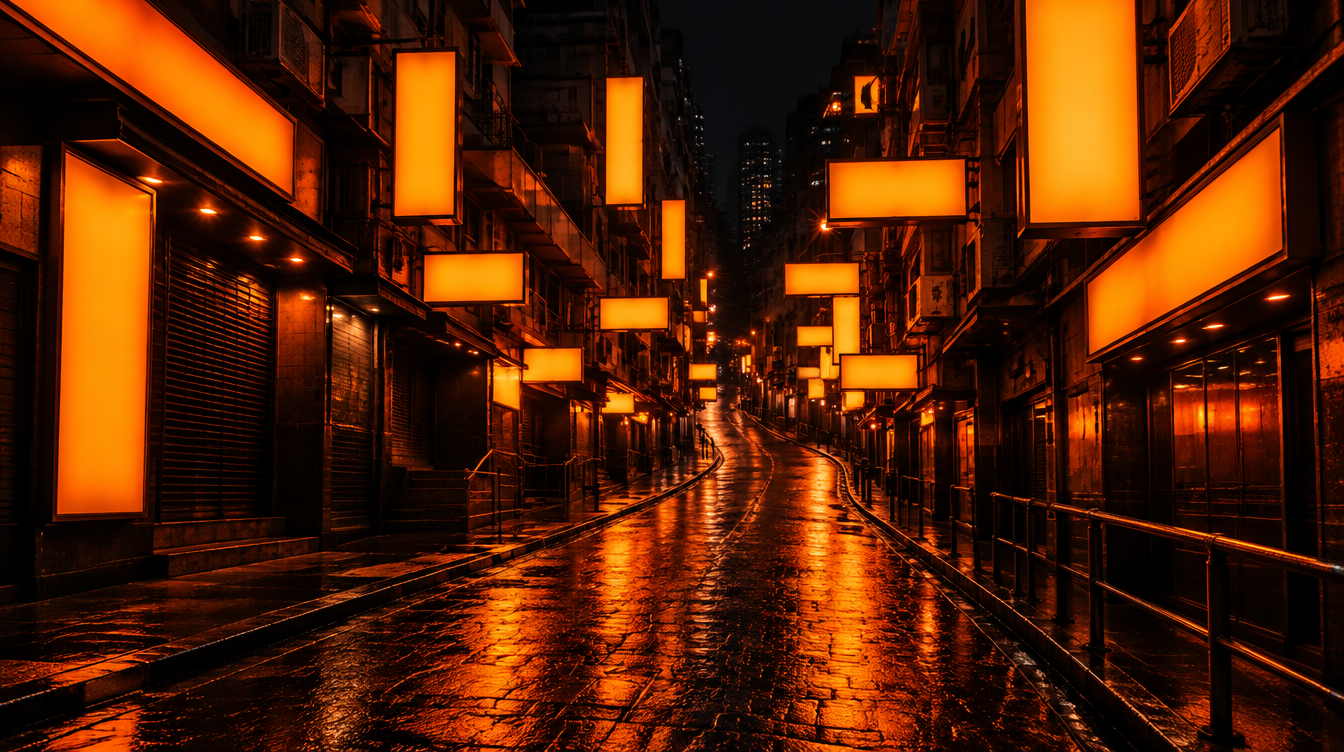
Stand at the bottom of D'Aguilar Street on a Friday at eleven and you'll see the whole shape of the thing in about ninety seconds: a line for the door of one room, a knot of people three drinks past deciding where to go next, someone's arm out for a taxi that isn't stopping because the street's been closed to traffic since eight. We've worked rooms two minutes' walk from this corner, and the thing you notice after enough nights here isn't the noise. It's how old the choreography is. People have been queuing on this exact slope since before most of Hong Kong's other nightlife districts existed at all.
The Name Meant Matchmakers, Not Nightlife
Lan Kwai Fong (蘭桂坊) translates roughly to "orchid square," but its older, more specific name was Matchmaker Lane — the area housed the mui yan, the traditional Chinese women who arranged marriages, through the 19th century (Wikipedia; South China Morning Post, "The Complete History of Lan Kwai Fong"). Through most of the 20th century it stayed exactly that unglamorous: a quiet lane in Central while Hong Kong's real nightlife sat in the ballrooms of five-star hotels like the Peninsula and the Hilton, and later in the clubs of Wan Chai and Tsim Sha Tsui. Nobody built Lan Kwai Fong to be a nightlife district. It became one almost by accident, and that accident has a start date.
One Neon Sign on a Dark Street Started It, on 23 December 1978
The first real nightlife venue on this street was Disco Disco, opened by Gordon Huthart on 23 December 1978 in a basement at 40 D'Aguilar Street (South China Morning Post, "The Complete History of Lan Kwai Fong"). DJ Andrew Bull, describing the street before it existed as a destination, remembered walking through "deserted streets of Central to a dingy D'Aguilar Street, and seeing one neon sign that said 'Disco Disco' — and nothing else." Disco Disco mixed a Western and Chinese crowd at a time when Hong Kong nightlife was still segregated by both class and, less discussed, sexuality; Huthart himself was one of the city's few openly gay public figures at a time when homosexuality was still a criminal offence here. Christian Rhomberg, who was there, called it "the Studio 54 of Hong Kong."
A Montreal Restaurateur Built the Building That Anchors the District Today
In 1983, Montreal-raised businessman Allan Zeman opened a restaurant called California on the ground floor of what's now California Tower, at 30-32 D'Aguilar Street, modelled loosely on the energy of Montreal's Crescent Street (South China Morning Post; CNN Travel). It earned him the nickname "the Father of Lan Kwai Fong" and it worked because it did something the street hadn't done before: it made a Western-style bar-restaurant feel like somewhere Hong Kong wanted to be seen, not just somewhere expats hid. California Tower is now a 27-storey building that's carried "fine dining, extraordinary entertainment and world-class nightlife" for close to three decades, according to its own operators, and went through a full renovation in 2016 that reorganised the tower around restaurants and bars on the lower floors, an event space on the 22nd, and lifestyle retail above that (californiatower.com, accessed Aug 2026). Whatever else has turned over on this street since 1983, that tower hasn't stopped being the address people orient themselves by.
A district doesn't survive four and a half decades by staying the same. It survives by being the place everyone else still measures themselves against.
21 People Died Here on New Year's Day 1993, and It Changed How This City Manages Every Crowd
This has to be in any honest account of the street, because it's the single event that most changed how Lan Kwai Fong — and every dense outdoor crowd in Hong Kong since — is policed. Just after midnight on 1 January 1993, with roughly 20,000 people packed into the district for New Year's, a crush developed at the junction of Wellington Street and Wing Wah Lane after part of the crowd surged, tripped on a slope and steps, and couldn't get back up under the weight of people behind them. Twenty people died at the scene; a 21st died later in hospital, out of 67 people taken to hospital that night (Hong Kong Jockey Club Disaster Preparedness and Response Institute, case study PDF). All of the dead were between 15 and 30 years old. Some contemporary press accounts, including a South China Morning Post retrospective, cite a rounder figure of "20 killed, more than 100 injured" — both figures trace to the same night and the discrepancy is in how the hospital deaths and admissions were tallied, not in what happened. An inquest led by Judge Kemal Bokhary followed, and the crowd-control measures it produced — barricaded one-way routing, timed street closures, capped entry points — are the direct ancestor of the traffic plan police now issue every Halloween and New Year's for the same six streets (Hong Kong Police Force, Halloween crowd management notice, Oct 2022).
On Big Nights, Six Streets Close to Traffic From Early Afternoon
That legacy is still visible on the ground. For Halloween, police close D'Aguilar Street, Lan Kwai Fong lane itself and four surrounding streets from 2pm through 5am the following morning, suspend parking on Stanley Street, On Lan Street and Wyndham Street, and reserve the right to widen the closure zone if the crowd builds faster than expected (Hong Kong Police Force / Government of Hong Kong press notice, 28 Oct 2022). The same playbook runs every New Year's Eve and Christmas across Hong Kong Island and Kowloon (Government press notice, 20 Dec 2023). None of that infrastructure is decorative. It's the direct, dated consequence of one night in 1993, and it's why Lan Kwai Fong on a big date now feels less like a street party and more like a managed event with a street party inside it.
The District Is Physically an L, and That Shape Still Decides Where You End Up
Lan Kwai Fong the lane is L-shaped, both ends meeting D'Aguilar Street at right angles, which together form something closer to a rectangle (Wikipedia, "Lan Kwai Fong"). The practical geography spills out from there: D'Aguilar Street runs the steep spine down toward Queen's Road Central, Wing Wah Lane and Wo On Lane carry the narrower side-street bars, and the district blurs upward into Wellington Street and Wyndham Street toward Central proper. There's no flat ground in Lan Kwai Fong. Every route in or out involves a slope, and on a wet night that slope is the single most-cursed feature of the entire district — ask anyone who's tried to carry four drinks down D'Aguilar Street in heels.
The Room Doing the Most for the District's Reputation Right Now Is Underground
Tucked into LKF Tower on D'Aguilar Street, Boomerang has climbed DJ Mag's Top 100 Clubs list for six straight years — #98 to #72 to #52 to #43 to #40 to #32 in 2026 — the first Hong Kong club ever to chart on that list at all (DJ Mag Top 100 Clubs; consistent with the ranking history cited on Mandos's own Boomerang venue page). That single fact does more for Lan Kwai Fong's credibility with a serious clubbing audience than any amount of street-level foot traffic, because DJ Mag's list isn't judged on how loud a Friday gets. It's judged room by room, against clubs in Berlin, London and São Paulo that don't care what Hong Kong used to look like in 1993 or what the rent is on D'Aguilar Street this year. A club climbing that list six years running means the room is still getting better, not just still open.
The Street-Level Business Mix Has Shifted, and the Tenants Say It Plainly
Hong Kong's bar sector had a hard first half of 2025 — roughly 120 bars closed citywide against only 70-80 openings, close to a tenth of the total, and a wave of long-running names went with it: Liberty Exchange Kitchen & Bar after fifteen years, the Stockton speakeasy after twelve, The Envoy after almost a decade (Shroffed, 24 Apr 2026). That pressure shows up in Lan Kwai Fong specifically in what's moved into the empty units: hot pot chain Chaotianmen and karaoke operator Mei KTV both now occupy space in the district that would, a decade ago, almost certainly have gone to a Western-style bar (Shroffed, 24 Apr 2026). That's not decline so much as a different customer walking through the same door. Government figures put it in cold numbers: restaurant sector receipts across Hong Kong rose 1.1% in Q1 2026 to HK$28.4 billion, with non-Chinese restaurants up 2.8% — but bars specifically fell 4.0% over the same quarter (Census and Statistics Department, 6 May 2026). The honest read of that split is that bars are losing share of a sector that's growing, not that people have stopped going out. Where they're going is the harder question, and it isn't a mystery to anyone standing on D'Aguilar Street on a Saturday — it's mostly still full.
Meanwhile, More Visitors Are Arriving Than at Any Point Since the Pandemic
The demand side tells a more optimistic story. Hong Kong recorded 26.71 million visitor arrivals in the first half of 2026, up 13% year on year, according to the Hong Kong Tourism Board — with long-haul markets including France, Canada and Australia each posting growth of 20% or more, alongside the mainland volume (HKTB via The Standard, 16 Jul 2026). Lan Kwai Fong sits inside every one of those visitors' mental map of Hong Kong before they land — it's the one nightlife name that shows up in guidebooks written decades apart. Whether that arrivals number converts into a full room on D'Aguilar Street on a Tuesday is a different question than whether it converts on a Saturday, and the district's honest answer right now is: mostly the second one.
California Tower Is Still the Landmark People Use to Find Everything Else
Ask anyone who's lived in Hong Kong more than a few years how to get somewhere in Lan Kwai Fong and the directions still route through California Tower, even for venues that have nothing to do with the building. That's what forty-plus years of continuous operation on the same corner buys a piece of real estate: it stops being an address and becomes a compass point. Individual rooms in this district turn over — some fast, some slower. The landmarks they turn over around don't. That's also, not incidentally, the single most useful piece of practical advice for a first visit here: don't plan the night around a specific bar's name. Plan it around getting to California Tower, then let the street decide the rest.
Sources
- Wikipedia — "Lan Kwai Fong" (name origin, matchmaker-lane history, L-shaped street geography, 1993 stampede summary, accessed Aug 2026) · 1 August 2026
- South China Morning Post, HK Magazine — "The Complete History of Lan Kwai Fong" (Disco Disco opening 23 Dec 1978, Allan Zeman/California 1983, quotes from Andrew Bull and Christian Rhomberg) · 2 January 2015
- South China Morning Post — "Recalling deadly Hong Kong New Year 1993 stampede that killed 20 in Lan Kwai Fong" (alternate casualty figure, contemporary account) · 30 May 2018
- Hong Kong Jockey Club Disaster Preparedness and Response Institute — case study PDF, "New Year's Stampede: Lan Kwai Fong 1993" (20 dead at scene, 1 later in hospital of 67 admitted, ages 15-30, inquest by Judge Kemal Bokhary) · 1 January 2026
- Government of Hong Kong / Hong Kong Police Force press notice — "Special traffic arrangements for Halloween at Lan Kwai Fong" (six-street closure 2pm-5am, parking suspensions) · 28 October 2022
- Government of Hong Kong press notice — "Crowd safety management measures and special traffic arrangements for Christmas on Hong Kong Island and Kowloon" · 20 December 2023
- californiatower.com — official site, "About Lan Kwai Fong" (27-storey tower, 2016 renovation, floor programme, accessed Aug 2026) · 1 January 2026
- Shroffed — "Last Call for Old Hong Kong: How the City's Nightlife Lost Its Spark" (120 bars closed H1 2025 vs 70-80 openings, named closures, Chaotianmen/Mei KTV taking former bar space in Lan Kwai Fong) · 24 April 2026
- Census and Statistics Department — "Provisional statistics of restaurant receipts and purchases for first quarter of 2026" (HK$28.4B receipts +1.1%, non-Chinese restaurants +2.8%, bars -4.0%) · 6 May 2026
- The Standard, via Hong Kong Tourism Board — "Hong Kong sees 13pc surge in visitor arrivals in first half of 2026, reaching 26.71m" · 16 July 2026
- DJ Mag Top 100 Clubs — Boomerang ranking history #98 to #32 across six consecutive years, first Hong Kong club to chart · 1 January 2026
Frequently asked
- How do you get to Lan Kwai Fong?
- Walk up D'Aguilar Street from Queen's Road Central — it's a short, steep climb from Central MTR station (Island and Tsuen Wan lines), about five minutes on foot.
- Why is it called Lan Kwai Fong?
- The name translates roughly to "orchid square," but the older, more specific name was Matchmaker Lane — the area housed traditional Chinese marriage matchmakers, or mui yan, through the 19th century (Wikipedia; SCMP).
- When did Lan Kwai Fong become a nightlife district?
- The shift started on 23 December 1978, when Disco Disco opened at 40 D'Aguilar Street. Allan Zeman's California restaurant, opened in 1983 in what's now California Tower, accelerated it into the district it is today (SCMP, "The Complete History of Lan Kwai Fong").
- What happened in Lan Kwai Fong on New Year's 1993?
- A crowd crush at the junction of Wellington Street and Wing Wah Lane killed 21 people (20 at the scene, one later in hospital) among roughly 20,000 revellers, and led directly to the barricaded street-closure system Hong Kong police still use for Halloween and New Year's in the district today (HKJC Disaster Preparedness and Response Institute; Hong Kong Police Force, Oct 2022).
- Is Lan Kwai Fong still busy in 2026, given Hong Kong bars have been closing?
- Bar sector receipts fell 4.0% in Q1 2026 even as overall restaurant receipts rose 1.1% (C&SD, 6 May 2026), and roughly 120 bars closed citywide in H1 2025 (Shroffed, 24 Apr 2026). Lan Kwai Fong has absorbed some of that shift — with tenants like hot pot and KTV operators moving into former bar space — but visitor arrivals are up 13% year on year in H1 2026 (HKTB), and Boomerang, inside LKF Tower, has climbed DJ Mag's Top 100 Clubs list for six consecutive years.
Related
Halloween in Lan Kwai Fong 2026: two calendars, three Saturdays, and the one most people will get wrong
The Tourism Board's first Hong Kong Halloween Month puts cosplay street parties across five districts on 17, 24 and 31 October. Lan Kwai Fong's own programme starts earlier and runs longer. Plan around the Saturdays alone and you miss half of it.
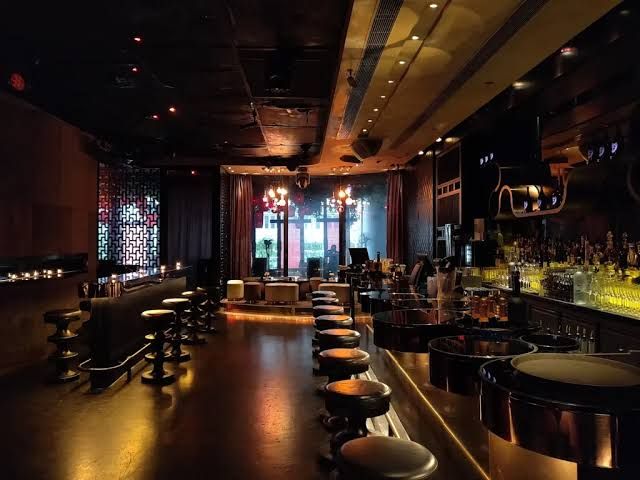
dragon-i
Inside dragon-i's members' room there's a door marked 115 — the BPM the owner prefers, not a table number. That single figure says more about the 2026 rebuild than a capacity count could: one owner, one Central address, twenty-four years, and a designer he spent fourteen years choosing.
Upper Hong Kong
The soft opening ran four nights, 24–27 June 2026, and it was the Lan Kwai Fong Group's own account that put a name to it, not Upper's. Behind the room sits a Bangkok operator that has never named a founder in public — its first address outside Thailand, eight floors up a tower that already ran two clubs.
FAYY
Twenty-six floors above Lan Kwai Fong, someone hung a fairground carousel over the bathroom sinks — set exactly where the mirror photos happen. That's FAYY: the room Volar's team built after seventeen years underground, and five years on, it's still booking Saturdays.
Versus
Volar ran this basement for seventeen years before it closed in 2021. Versus reopened the same room under a new name and made no attempt to replace what was there — it rents the two spaces out nightly to whoever has a crowd, from trance crews to Bollywood promoters to the official Clockenflap afterparty. Same stairs. Different night, every night.
Cassio Social Club
There's a Marco Brambilla video installation on the second floor of LKF Tower, and most of Hong Kong doesn't know it's there. That's Cassio.
Shuffle
Walk past the bar at Shuffle and the wall behind it is doing something: roughly 250 electronic bottles, lit and synced to the track. That's the least surprising thing about the highest-rated club in Lan Kwai Fong — 4.8 out of 5 from 331 reviews — and almost nobody has written about why.
Space Club
Space Club climbed from 92nd to 69th on DJ Mag's Top 100 Clubs in a single year — the sharpest rise of any Hong Kong room — out of a 500-capacity, Funktion-One floor on Wyndham Street that runs its whole operation off Instagram, WhatsApp and a Korean-language booking channel.
Hong Kong's spirits-duty cut moved 20% more liquor into the city — but not into your glass
Since October 2024 the duty on premium spirits fell from 100% to 10%. Import volumes are up more than 20% and their value has nearly doubled — yet bar receipts still fell. Here's the gap between the trade story and the drink in your hand.
Boomerang
A motorised ceiling turns over a Funktion-One rig in the old Hard Rock Cafe space — and for six straight years Boomerang has climbed DJ Mag's Top 100 Clubs without a single year in reverse, to #32 in 2026.