
Tai Hang Turned Its Garages Into Bars, and Keeps a 67-Metre Fire Dragon for Autumn
Behind Causeway Bay, a grid of old car-repair streets has become one of the city's better small-bar clusters — and once a year, the whole neighbourhood still parades a dragon covered in 12,000 burning incense sticks. This is the fact-checked guide to what's open, what's worth the walk, and what to know before Mid-Autumn.
Fact-checked 10 October 2026
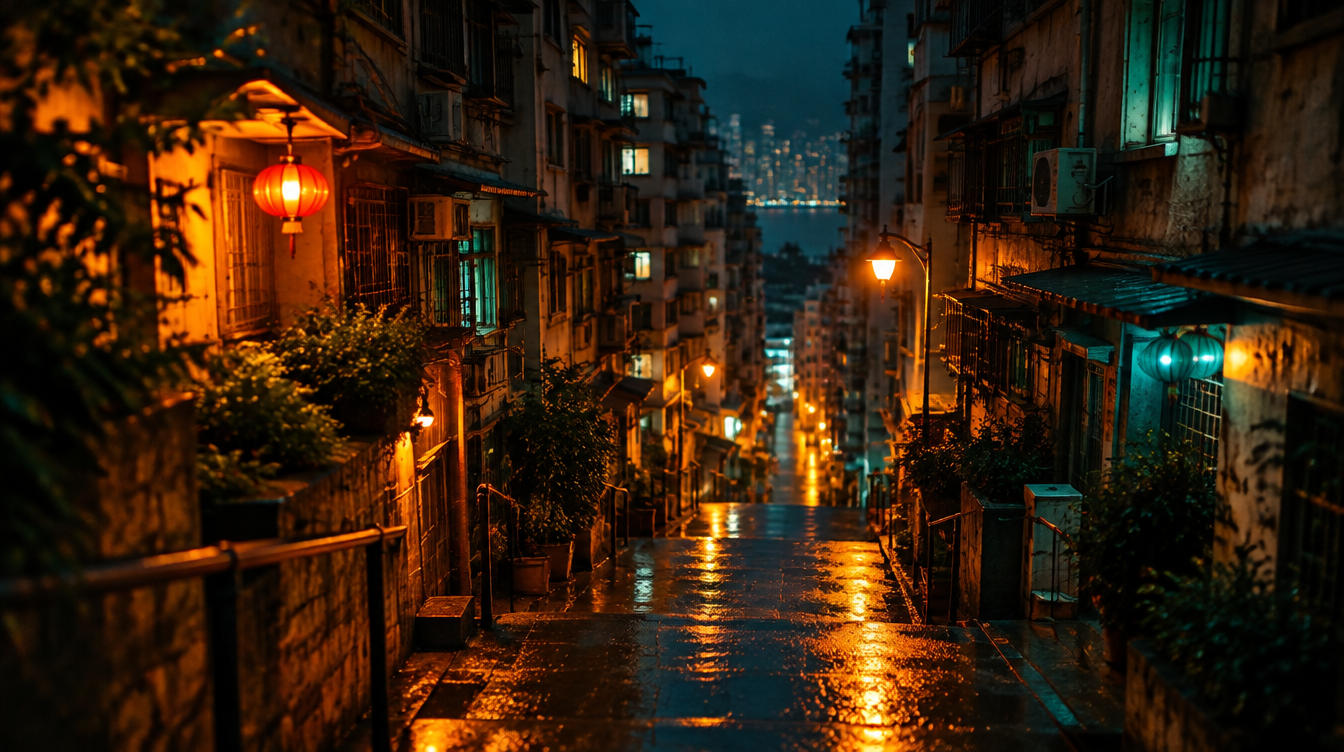
I keep ending up on the same stretch of Brown Street. Not for one specific reason — a narrow zinc counter at a yakitori-and-sake spot, roller shutters still hand-painted with garage numbers nobody's repainted since the mechanics left, charcoal smoke drifting out past ten on a Tuesday. Tai Hang does that: gives you a reason to loiter without asking you to justify it. Once a year, on those same lanes, a 67-metre dragon covered in roughly 12,000 lit incense sticks passes close enough that the ash lands on your shoulders. Both belong to the same handful of streets behind Causeway Bay, and neither one is performing for the other.
The Neighbourhood Ran on Car Repair Until the Rent Made That Impossible
Tai Hang was a printing district through the 1960s. As cars spread across the city, the printers gave way to garages through the 1970s, and by the 1980s the neighbourhood had become a genuine repair hub — more than 100 garages, with dim sum shops nearby staying open late to feed the taxi drivers who used them. Rents climbed, and the count has fallen to roughly 20 today. Cafés and restaurants have been moving into the vacated units since the early 2010s — but the pressure that pushed the garages out hasn't gone anywhere; it just changed tenants. The turnover here is a landlord's tool, not a one-time event, and it's worth knowing that before you fall for any single address.
The Street Grid Is a Buried Drainage Channel, and the Temple Predates All of It
The name itself is the first clue: Tai Hang — 大坑 — means "big nullah," a reference to the drainage channel that once ran through what was a Hakka farming and fishing village on the Causeway Bay waterfront. That channel is now covered over; it's the ground beneath Wun Sha Street and the Fire Dragon's own route. Low-rise tong lau hold the grid together, with laneways narrow enough to catch direct sun in a way that reads closer to a Tokyo or Taipei backstreet than to the tower blocks on the other side of Causeway Road. Lin Fa Kung temple, probably built in 1863 and declared a government monument in 2014, still stands at the top of the district, dedicated to the Goddess of Mercy — a fixed point the rest of the neighbourhood has rebuilt itself around more than once.
Four Streets Hold the Bar Cluster Worth Walking For
On Brown Street, Moto Yakitori & Sake Bar runs charcoal-fired skewers and claypots against a working sake list — closer to an Osaka backstreet counter than to a set-menu izakaya. On King Street, Mustard pours a rotating, thoughtfully picked wine list in a room built for two-hour conversations rather than a single fast glass. Around the corner on Lin Fa Kung Street West, Ask For Alonzo — now one of five trattorias the group runs across the city — keeps an Alonzo Hour from 3pm to 8pm, cheaper cocktails alongside the pasta. And on Sun Chun Street, Tomo bills itself as a midnight neighbourhood club, building cocktails around herbal tea and staying open well past the hour most of Tai Hang's kitchens close. None of these rooms seats more than a few dozen people. That's the format, not a limitation of it.
A Coffee Counter on King Street Turns Into a Cocktail Bar Without Changing Address
Winston's Coffee, also on King Street, runs the same room two ways: espresso and cold brew by day, a black-and-white-tiled cocktail bar once the light goes. It's a small, specific example of a pattern that shows up across the district — a neighbourhood built for coffee in the morning doesn't need to become a different neighbourhood by 9pm. It just needs a different pour.
The Fire Dragon Has Paraded Almost Every Mid-Autumn Since 1880, and Is Now National Heritage
The most commonly told version has a plague breaking out in Tai Hang in 1880, ended when villagers built an incense-covered straw dragon and paraded it through the lanes for three nights with firecrackers, to dispel the disaster. A second version, also in circulation, adds a typhoon and a python preying on livestock, resolved only when a soothsayer prescribed the same three-night dance — sources disagree on the detail, not on the outcome. Either way, the practice held, becoming an annual Mid-Autumn ritual performed by what was then a Hakka village. It was inscribed onto China's third national list of Intangible Cultural Heritage in 2011.
It's one of the only nights in this city where an entire street rebuilds itself around a smell — the sting of incense smoke that stays in your clothes for days after.
This Year's Parade Runs Three Nights, 24–26 September, Carried by Around 300 People
For 2026, the Fire Dragon Dance is scheduled for Thursday 24 to Saturday 26 September, timed to the 14th to 16th days of the eighth lunar month around Mid-Autumn Festival, which falls on 25 September 2026. The dragon itself weighs in with a 48kg head, needs roughly 300 people to carry it across the three nights, and a smaller LED version is walked through the streets by children as a companion piece. Wun Sha Street is generally named as the best viewing point. Exact 2026 start times hadn't been published by organisers as of mid-August — last year's parade ran roughly 8:15pm to 10:30pm, and that's a reference point only, not a confirmed 2026 schedule. Check closer to the date rather than planning an evening around it.
Come Here When You Want the Night to Start Before Nine, Not After Midnight
Causeway Bay next door runs on volume — queues at the popular counters, malls that keep going until the last shopper leaves, a crowd built for turnover. Tai Hang is the opposite shape: rooms that seat a few dozen, kitchens that close early, a night that peaks well before the hour Causeway Bay's does. That's a real trade, and it's worth naming plainly rather than dressing it up. Come here for the first three hours of an evening — dinner, a glass, a second glass somewhere quieter — and treat Causeway Bay as where the night goes next, not the other way round.
Two MTR Exits Cover the Whole District on Foot
There's no MTR station inside Tai Hang itself. From Causeway Bay station, Exit E, head along Yee Wo Street to Causeway Road and cross near the Hong Kong Central Library. From Tin Hau station, Exit A1, follow King's Road across to Causeway Road and turn onto Tung Lo Wan Road before Queen's College. Either walk lands you inside the grid in a few minutes — this is a district built to be covered on foot, not one requiring a second transfer.
Sources
- Zolima City Mag — "Forgotten Hong Kong Icon: Tai Hang's Last Garages" (garage history, 1960s printing to 1970s garages, 1980s peak of 100+ garages, decline to ~20, gentrification since early 2010s) · 1 January 2026
- Wikipedia — "Tai Hang" (name meaning "big nullah", Hakka village origin, Wun Sha Street/Fire Dragon Trail as covered drainage channel, plague/typhoon/python legend variant) · 1 August 2026
- Tatler Asia — "The best restaurants, cafes and bars in Tai Hang, Hong Kong" (Moto Yakitori address/concept, Mustard address/concept, tong lau grid and laneway description, Tokyo/Taipei comparison) · 1 January 2026
- Sassy Hong Kong — "Your Neighbourhood Guide To Tai Hang" (Ask For Alonzo, Tomo, Winston's Coffee addresses and concepts, Fire Dragon plague origin account) · 1 January 2026
- Ask For Alonzo — official locations page, askforalonzo.com/locations (confirms current Tai Hang location among five active trattorias) · 1 January 2026
- Vogue Hong Kong — "Neighbourhood Guide: Tai Hang" (Winston's Coffee day-to-night cocktail bar concept, Lin Fa Kung Temple/Fire Dragon Heritage Centre mentions) · 1 January 2026
- The Honeycombers — "A local's guide to Tai Hang, Hong Kong" (MTR access via Causeway Bay Exit E and Tin Hau Exit A1, Tomo bar description) · 1 January 2026
- Antiquities and Monuments Office — Lin Fa Temple listing, amo.gov.hk (built probably 1863, declared monument 2014) · 1 January 2026
- icho.hk — "Mid-Autumn Festival – the Tai Hang Fire Dragon Dance" (inscribed onto China's third national Intangible Cultural Heritage list, 2011; three-day procession, 14th–16th days of eighth lunar month) · 1 January 2026
- Sassy Hong Kong — "Tai Hang Fire Dragon Dance Parade 2026" event page (2026 dates 24–26 September, dragon 67m long, ~12,000 incense sticks, 300+ performers, Wun Sha Street viewing) · 1 January 2026
- Hong Kong Tourism Board (discoverhongkong.com) — "5 Fun Facts about the Tai Hang Fire Dragon Dance" (48kg dragon head weight, 19th-century origin, National ICH status) · 1 January 2026
- TravelChinaGuide — Mid-Autumn Festival 2026 date confirmation (25 September 2026) · 1 January 2026
- Hong Kong Cheapo — Tai Hang Fire Dragon event page (2025 parade timing reference, 8:15pm–10:30pm, used only as a prior-year reference point, not a 2026 confirmation) · 1 May 2025
- SCMP — "Popular Hong Kong Island gastropub Second Draft to close in the face of a rent rise"; corroborated as permanently closed via Foursquare listing (used only to confirm exclusion of a closed venue, not named in the published guide) · 1 January 2022
Frequently asked
- When is the Tai Hang Fire Dragon Dance in 2026?
- It's scheduled for three nights, Thursday 24 to Saturday 26 September 2026, around Mid-Autumn Festival (25 September 2026). Exact nightly start times hadn't been published by organisers as of mid-August 2026 — last year's parade ran roughly 8:15pm to 10:30pm, but treat that as a reference point, not this year's confirmed schedule.
- Where's the best place to watch the Fire Dragon Dance?
- Wun Sha Street is generally named as the best viewing point, and it sits on the buried drainage channel the district is named for. The dragon also passes through the wider Tai Hang grid across the three nights.
- Is the Fire Dragon Dance an official cultural heritage event?
- Yes. It was inscribed onto China's third national list of Intangible Cultural Heritage in 2011, with roots that trace back to 1880 in what was then a Hakka farming and fishing village.
- How do you get to Tai Hang without a car?
- Two MTR exits cover it: Causeway Bay station Exit E, walking along Yee Wo Street to Causeway Road, or Tin Hau station Exit A1, via King's Road and Tung Lo Wan Road. Both walks take a few minutes to reach the district's grid.
- What kind of bars does Tai Hang have?
- Small, single-room formats rather than a nightlife strip: a charcoal yakitori and sake counter on Brown Street, a wine bar on King Street, a trattoria with a fixed cocktail happy hour on Lin Fa Kung Street West, a late-opening cocktail bar on Sun Chun Street, and a coffee counter that becomes a cocktail bar after dark on King Street.