
Natural Wine in Hong Kong: How a Niche Became a Night Out
A zero-duty city built the trading hub. One Hollywood Road importer and a small run of bars built the actual scene — and it took sixteen years to get from cellar shelf to a table you'd book on a Tuesday.
Fact-checked 11 October 2026
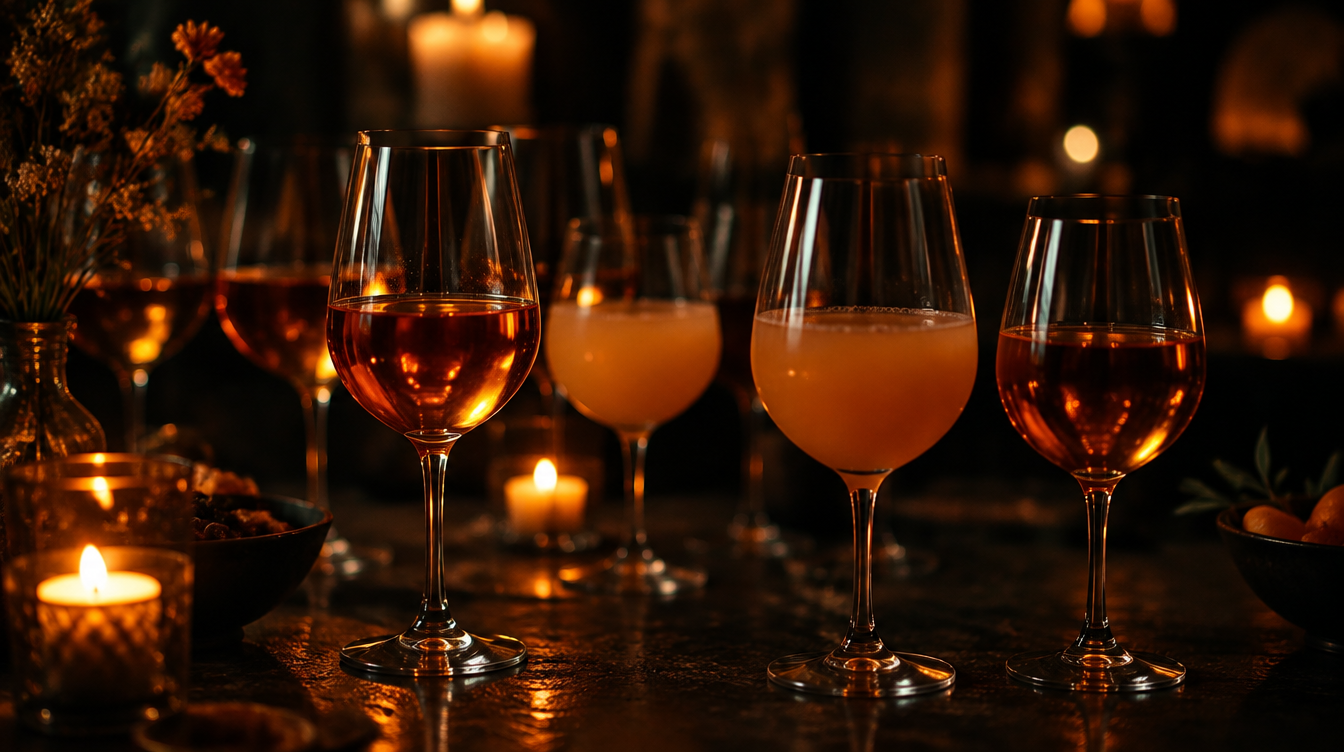
On a Tuesday night on Hollywood Road, a couple splits a glass of skin-contact wine before their food has even landed. Nobody at the table calls it orange wine — they just order what's chalked up that week, a Jura white gone the colour of weak tea from weeks on its skins.
The importer who sourced it has been doing this since before most people drinking it were old enough to order wine at all. That's La Cabane, and its Hollywood Road cellar is where Hong Kong's natural wine story actually begins — not with a trend piece, but with two importers who bet on growers nobody here had heard of, in a city that had just made betting on wine unusually cheap to do.
Hong Kong scrapped wine duty entirely in February 2008 — and that built a trading hub, not a natural wine scene
Wine duty in Hong Kong ran as high as 80% before the government halved it in 2007, then abolished it outright in February 2008 (Commerce and Economic Development Bureau; South China Morning Post, 8 Nov 2018). That single decision is why Hong Kong now runs a wine fair that pulled 621 exhibitors and 8,219 physical buyers from 57 countries and regions in 2025, with the next edition booked for 5–7 November 2026 (HKTDC).
Worth separating from the story you may already know: the 16 October 2024 spirits duty cut — which took the rate on liquor above 30% ABV from 100% to 10% on the portion of the import price over HK$200 — doesn't touch wine at all. Wine's rate hasn't moved since 2008. It's zero, and it always has been for this generation of drinkers.
What zero duty built first was a trading and storage hub for fine wine — auctions, investment cellars, the big Bordeaux and Burgundy names. Natural wine had to find its own foothold inside that infrastructure. It didn't arrive because of the policy; it arrived because two people decided to import it anyway.
La Cabane became Hong Kong's first dedicated natural wine importer in 2010, before the category had a local audience
Cristobal Huneeus and Karim Hadjadj opened La Cabane as an import cellar in 2010, buying direct from growers rather than through distributors, at a moment when natural wine barely registered as a category in the city (The Loop HK, 8 Jul 2016; The Drinks Business, May 2022). The business grew into what it is today: a cellar and shop on Hollywood Road plus a separate bistro nearby, listing several hundred wines sourced directly from producers across France, South Africa, Australia, New Zealand, Austria, Italy, Spain, Georgia, China, Czechia and the US (lacabane.hk; afoodieworld, 31 Mar 2026).
"If it's good, it means you can finish the bottle on your own and want to start another one."
— Cristobal Huneeus, co-founder of La Cabane, on his standard for a wine list (The Loop HK, 8 Jul 2016). Sixteen years in, the business is still running — a Grapes & Grains Tasting is booked for 20 August 2026 — which makes it less a moment than a fixture (lacabane.hk, accessed 15 Aug 2026).
It took a decade for the category to reach a fine-dining wine list, not just an importer's own room
The Baker & The Bottleman opened on Lee Tung Avenue in Wan Chai on 1 January 2022 — a bakery downstairs, a wine bar upstairs, its list of organic and biodynamic wines curated with Roganic's own kitchen and master sommelier Pierre Brunelli (Time Out Hong Kong, 31 Dec 2021). That pairing is the tell: a fine-dining name lending its sommelier to a bakery's wine list is not a niche importer talking to the same twenty regulars. It's the category moving sideways into rooms that were never built around it.
A run of small bars has turned the bottle into a sit-down night, not a shopping trip
Two rooms worth knowing sit a short walk apart on Hong Kong Island. Silene, on Aberdeen Street in Central, runs the full spectrum — sparkling through orange through fortified — and was named among Star Wine List's top 11 Hong Kong wine bars for 2026, picking up their Silver Award for Best Newcomer the same year (silenewinebar.com; Star Wine List, 2026). Crushed Wine Bar, on Second Street in Sai Ying Pun, builds its list around sustainable, small-batch producers and pairs it with pasta and sharing plates, open seven days a week including a weekend lunch service (crushedwines.com, accessed 15 Aug 2026).
Neither room styles itself as a purist natural wine bar the way La Cabane does. Both stock it alongside conventional bottles — which is arguably the more useful signal: the category has stopped needing a dedicated address to survive.
Most of the city's wine list is still built around Bordeaux and Burgundy, and that hasn't changed
Scan Hong Kong's broader wine-bar map and the centre of gravity is still classic: Le Quinze Vins and its cheese room in Wan Chai, Terroirs and James Suckling Wine Central built around Bordeaux and Burgundy pedigree, Somm's 1,600-bottle list at the Landmark Mandarin Oriental (Time Out Hong Kong, 2026 guide). Natural wine sits inside that map now, in a handful of addresses — it hasn't replaced it, and nobody serious is claiming it has.
Where to drink it tonight
At La Cabane on Hollywood Road, ask what's just been opened rather than picking off the printed list — the growers' selection turns over faster than the menu does. At Crushed in Sai Ying Pun, come for the sharing plates and let the sustainable list do the pairing. At Silene in Central, order down the orange section first — it's the newest name on this list and the one that just won for it. And at The Baker & The Bottleman in Wan Chai, go upstairs even if you only came in for the bread.
Sources
- Commerce and Economic Development Bureau / wine.gov.hk — confirms wine duty removed entirely from February 2008 · 15 August 2026
- South China Morning Post, "10 years after wine tax abolished, Hong Kong is Asia's wine hub" — duty history, 80% pre-2007 rate · 8 November 2018
- Secretary for Commerce and Economic Development via SCMP — 16 Oct 2024 spirits duty cut applies only to liquor above 30% ABV · 4 March 2025
- HKTDC Hong Kong International Wine & Spirits Fair, "Fair at a Glance" — 621 exhibitors, 8,219 physical buyers from 57 countries/regions in 2025; 2026 edition 5–7 Nov · 15 August 2026
- The Loop HK, profile of Cristobal Huneeus of La Cabane — 2010 founding, sourcing philosophy, quote · 8 July 2016
- The Drinks Business, "Hong Kong goes wild for natural wine" — La Cabane founding date and early market context · 1 May 2022
- lacabane.hk — current wine list, sourcing countries, Grapes & Grains Tasting event 20 Aug 2026 · 15 August 2026
- afoodieworld.com, "The best wine bars in Hong Kong for your next vino fix" — La Cabane list size and description · 31 March 2026
- Time Out Hong Kong, "New bakery and wine bar, The Baker & The Bottleman, opens on January 1" — opening date, address, Pierre Brunelli/Roganic curation · 31 December 2021
- silenewinebar.com — Star Wine List Top 11 HK Wine Bars 2026 and Best Newcomer Silver Award · 15 August 2026
- crushedwines.com — Crushed Wine Bar address, hours, sustainable small-batch focus · 15 August 2026
- timeout.com/hong-kong, best wine bars guide — Le Quinze Vins, Terroirs, James Suckling Wine Central, Somm listings · 15 August 2026
Frequently asked
- What actually makes a wine "natural"?
- There's no single legal definition, but importers working in the category — La Cabane among them — describe a shared thread: grapes farmed with minimal chemical input, fermentation left to native yeast rather than added cultures, and bottling with little or no added sulphur, unfined and unfiltered. It's a winemaking philosophy, not a certification you can look up on a label.
- Is natural wine taxed differently from other wine in Hong Kong?
- No. Hong Kong has charged zero duty on all wine, natural or otherwise, since February 2008. The spirits duty cut from 16 October 2024 that you may have seen referenced elsewhere applies only to liquor above 30% ABV, and only to the portion of the import price above HK$200 — it doesn't touch wine's rate, which hasn't changed since 2008.
- Is natural wine the same as organic or biodynamic wine?
- No, though the three overlap in practice. Organic and biodynamic describe how the grapes were farmed, and can carry formal certification. Natural describes what happens after the grapes are picked — minimal cellar intervention. A wine can be certified organic and heavily manipulated in the winery, or grown conventionally and made with none; most natural producers simply do both.
- Where in Hong Kong can I actually drink natural wine right now?
- La Cabane on Hollywood Road (Central) is the dedicated address. Silene on Aberdeen Street (Central) and Crushed Wine Bar on Second Street (Sai Ying Pun) both list it alongside conventional wine. The Baker & The Bottleman on Lee Tung Avenue (Wan Chai) pours an organic and biodynamic list upstairs from its bakery.
- Do any Michelin-listed restaurants in Hong Kong serve natural wine?
- The clearest link is indirect: Roganic's own kitchen team and master sommelier Pierre Brunelli helped build the organic and biodynamic wine list at The Baker & The Bottleman in Wan Chai — a sign the category has moved beyond importer-run rooms into the wider fine-dining orbit, even if it hasn't taken over Michelin lists outright.