
Hong Kong Gen Z Hold HK$50 Billion a Year, and on Singles' Day They Are Buying the Night, Not the Haul
On an 11.11 the big online sale is having a flat year, Hong Kong's under-27s, who hold about HK$50 billion in annual spending power, are quietly putting it into experiences over hauls, and the best value is a planned night in rooms like Versus and Shuffle, bookable through Mandos.

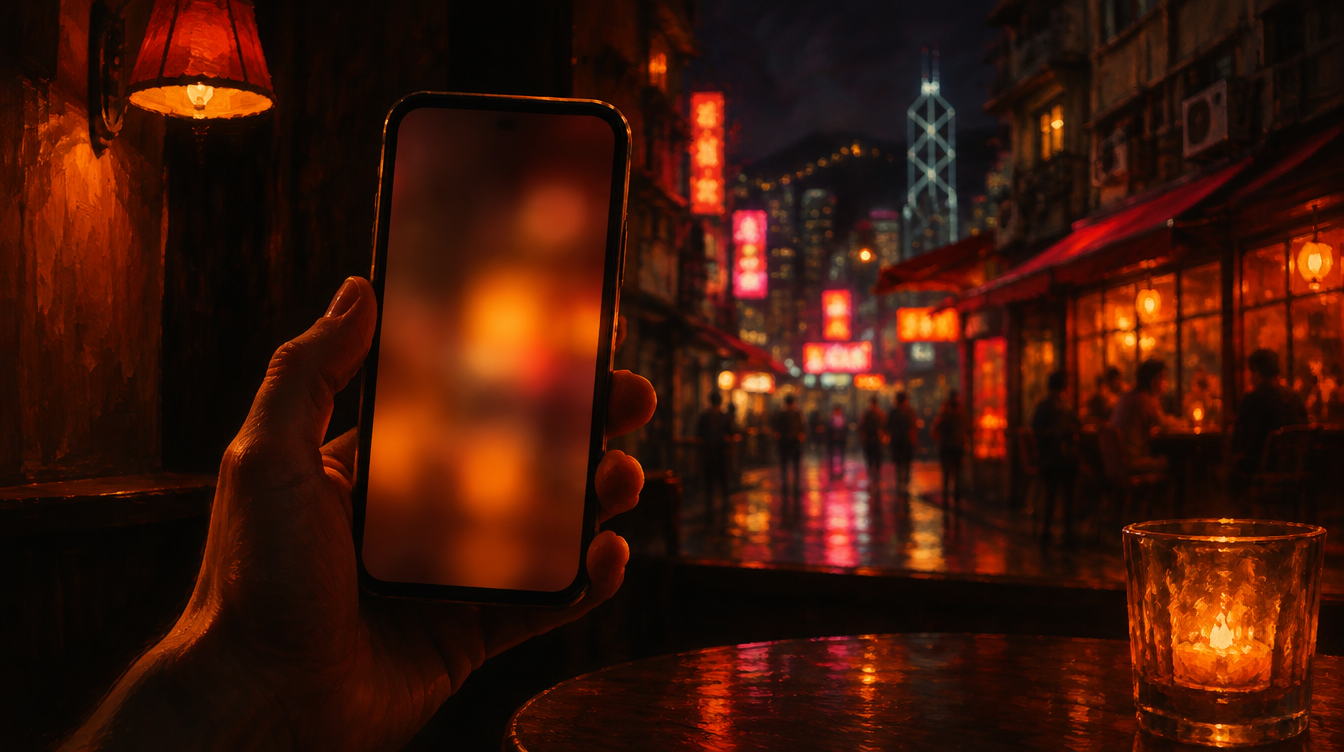
It is 11 November, and the biggest shopping day the region invented is having a quiet year. Across the border, Singles' Day sales crept to just over a trillion yuan by the end of October, broadly flat on the same point last year and a long way off 2025's record, with analysts describing a crowd suffering from discount fatigue and a mood one of them summed up as "just living life" rather than chasing the big haul. Hong Kong's under-27s are reading the moment the same way, and quietly moving the money: away from the cart, toward the night out. The short version: this city's Gen Z has real spending power, it is increasingly spending it on experiences rather than things, and on a night like tonight that increasingly means a room, a crowd and a plan, not a parcel.

The numbers underneath that are not small. Gen Z makes up about 22 per cent of Hong Kong's population and already controls annual spending power on the order of HK$50 billion, according to the Gen Z Pulse study published by Publicis Groupe Hong Kong with GWI and The Trade Desk in January 2026. The same study found this is not a generation lying flat: 57 per cent say they prioritise saving while still living fully, and more than a third travel every few months, which the researchers read as an appetite for experiences worth the indulgence. It also found a generation under real pressure, with 39 per cent prone to anxiety against a global average of 27, and spending on small, repeated pleasures as a way to cope. Put plainly: they are careful with money and they still want the night, and those two things are not in tension for them the way an older generation might assume.
Why the night out is winning
Because the thing a 20-something in Hong Kong is actually buying on a night out is not alcohol or a table. It is the evening itself, and the people in it. That reframing shows up in the drinks data, which has spent two years being misread. The received wisdom was that Gen Z had gone sober. The International Wine and Spirits Research group's own tracking tells a different story: across fifteen key markets, the share of legal-drinking-age Gen Z who had drunk alcohol in the past six months rose from 66 per cent in March 2023 to 73 per cent in March 2025. Their head of consumer research called the earlier dip "cyclical, not structural", the predictable effect of young people having less money during a cost-of-living squeeze rather than a generation that had turned its back on going out. As incomes steady, they come back. They were never gone; they were broke.

What they came back to is not their older siblings' night. The spend is sharper and the standards are higher. A night is planned in the group chat, costed before anyone leaves home, and judged on whether it was worth it afterwards, which is exactly the behaviour the Gen Z Pulse study describes in every other category these readers spend in. The 11.11 instinct and the night-out instinct are the same instinct: get something that feels worth the money, skip the thing that does not.

What a good Hong Kong night actually costs
This is where a city that runs nightlife for a living can be useful, because the honest answer is that a good night in Lan Kwai Fong costs a lot less than the reputation suggests, if you know where the value is. The district is not one price. At the affordable end, Versus, the two-room club on D'Aguilar Street that rents its floors to promoter collectives, runs a door of roughly HK$150 to HK$250 depending on whose night it is, with advance tickets cheaper than the door. Shuffle, the small, high-rotation open-format room on Lan Kwai Fong itself, has built the most loved young crowd in the district on short, packed, late nights rather than bottle service. Neither asks you to spend like it is 2015.
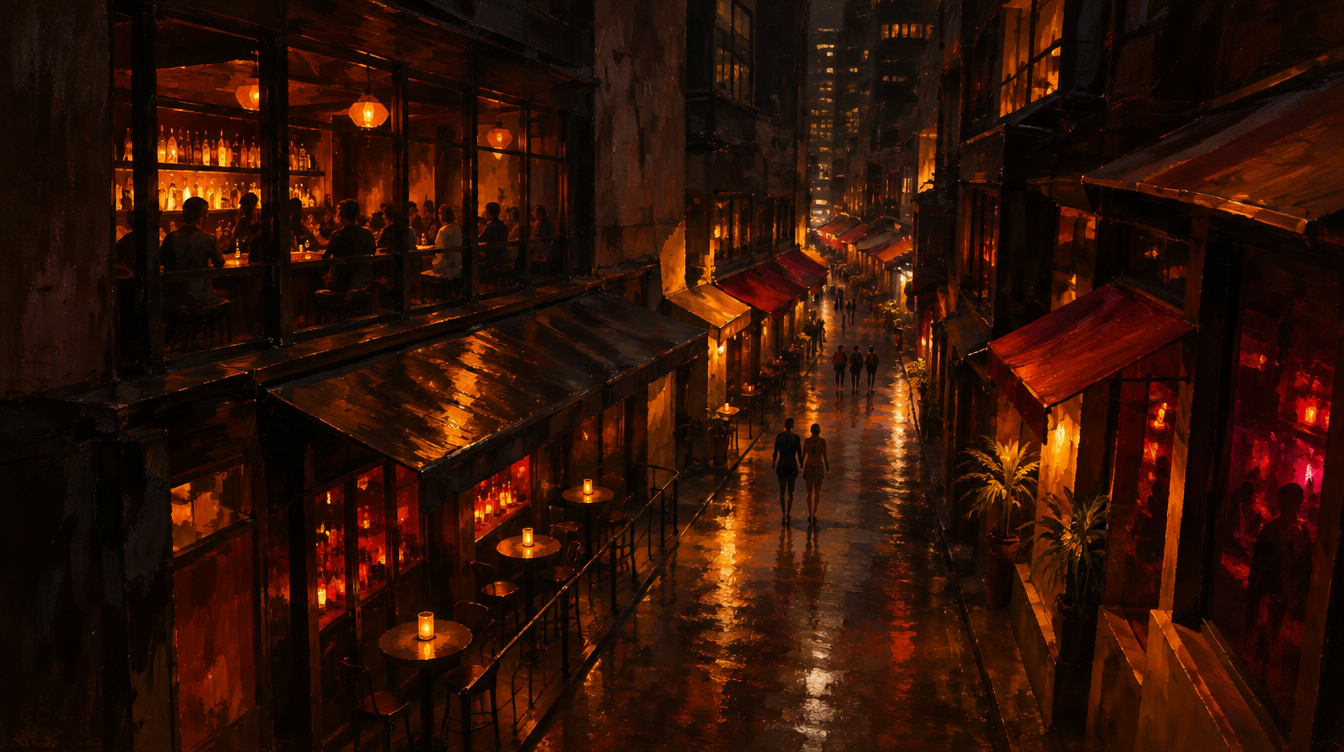
And the money is unmistakably in the city to spend. Visitor arrivals hit 26.71 million in the first half of 2026, up 13 per cent on a year earlier, on the Tourism Board's figures. Restaurant receipts grew too, up 1.1 per cent in value in the first quarter to HK$28.4 billion, with non-Chinese restaurants up 2.8 per cent, even as the bar category slipped: the going-out budget is not shrinking so much as moving around inside the night, from the last-call bar to the dinner, the gig and the room with the right crowd. For a generation deciding where a careful budget goes, that is the whole game.
The single most useful habit, and the one that separates a cheap good night from an expensive mediocre one, is buying the ticket in advance rather than at the door. The advance-to-door gap across the district tends to run around HK$70 to HK$100 a head, which over a group of six is the difference between one round and two. The money a 20-something did not spend on a 11.11 haul they did not need buys the better version of tonight, and it is not close.
The group chat is the real venue
If you want to understand how Hong Kong's Gen Z actually decides a night, stop looking at posters and start looking at the group chat. The night is chosen there, costed there, and committed to there, usually late and usually by whoever sends the most convincing single screenshot. That is a behaviour, not a problem, and it is why the pieces that travel in this city are the ones built to be forwarded into a chat and settle an argument: one room, one price, one plan, one tap to the ticket. The decision layer for a Hong Kong night out is not an app someone opens alone. It is six people in a thread at nine o'clock, and the thing that wins is whatever makes the next hour easy.

A generation careful with money and high on experiences is not sitting out the night. It is doing the night better.
So the Singles' Day read, stripped of the retail noise, is simple. A generation that is careful with money, high on experiences and quietly drinking again is not sitting out the night. It is doing the night better: cheaper, planned, and with the people it actually wants there. The haul was never the point. If you only do one thing with tonight, skip the cart you will forget by Friday and put the same HK$200 toward a room you will still be talking about next week. And if the group chat cannot decide, send the screenshot that ends it.
Sources
- Associated Press, 10 November 2026: Singles' Day 2026 sales subdued; cumulative sales just over 1 trillion yuan by end of October, broadly level with last year; analysts cite discount fatigue and a shift toward 'just living life' · 11 November 2026
- Branding in Asia, 19 January 2026, on the Gen Z Pulse study by Publicis Groupe Hong Kong with GWI and The Trade Desk: Gen Z is 22% of Hong Kong's population with about HK$50 billion annual spending power; 57% save while living fully; over a third travel every few months; 39% prone to anxiety vs a 27% global average; 61% want to make a positive impact · 11 November 2026
- IWSR via Drinks International, 26 June 2025: across 15 key markets, the share of legal-drinking-age Gen Z who drank alcohol in the past six months rose from 66% (March 2023) to 73% (March 2025); the dip described as cyclical, not structural · 11 November 2026
- The Standard, 16 July 2026: Hong Kong visitor arrivals reached 26.71 million in the first half of 2026, up 13% year on year (Hong Kong Tourism Board) · 11 November 2026
- Census and Statistics Department, 6 May 2026: provisional restaurant receipts for Q1 2026 at HK$28.4 billion, up 1.1% in value year on year, with non-Chinese restaurants up 2.8% and the bar category down · 11 November 2026
- Campaign Asia: Hong Kong's Gen Z is ambitious, anxious and spending to cope, favouring experiences and small indulgences · 11 November 2026

Ask Buzz
- Are Hong Kong's Gen Z spending less because of Singles' Day?
- Not on experiences. Singles' Day 2026 has been flat, with regional sales broadly level with last year and shoppers showing discount fatigue, but Hong Kong Gen Z, who hold about HK$50 billion a year in spending power, continue to prioritise experiences like travel and nights out over hauls. (Gen Z Pulse, Publicis Hong Kong with GWI and The Trade Desk, January 2026; Associated Press, November 2026.)
- How much spending power does Hong Kong's Gen Z have?
- Gen Z makes up about 22 per cent of Hong Kong's population and controls annual spending power on the order of HK$50 billion, according to the Gen Z Pulse study by Publicis Groupe Hong Kong with GWI and The Trade Desk, published in January 2026.
- Is Gen Z really drinking less?
- No. Across 15 key markets, the share of legal-drinking-age Gen Z who had drunk alcohol in the past six months rose from 66 per cent in March 2023 to 73 per cent in March 2025, and IWSR described the earlier dip as cyclical rather than structural. (IWSR via Drinks International, June 2025.)
- How much does a night out in Lan Kwai Fong cost?
- Less than the reputation suggests, if you know where to look. At the affordable end, Versus on D'Aguilar Street runs a door of roughly HK$150 to HK$250 depending on the night, and advance tickets save around HK$70 to HK$100 a head over paying at the door. (Checked by Mandos News, 11 November 2026.)
- What is the cheapest way to have a good night out in Hong Kong?
- Plan it in advance. Pick the room and the crowd first, buy the ticket before the night rather than at the door to save roughly HK$70 to HK$100 a head, and start at an affordable room like Versus in Lan Kwai Fong. (Checked by Mandos News, 11 November 2026.)