
Hong Kong's Dress Codes Aren't Written Down — Except at the Members' Clubs
The Ritz-Carlton's rooftop bar spells out its rules in writing. The World's Best Bar has none at all. Here's how the city's doors actually read a room, and what to wear so you never find out the hard way.
Fact-checked 11 October 2026
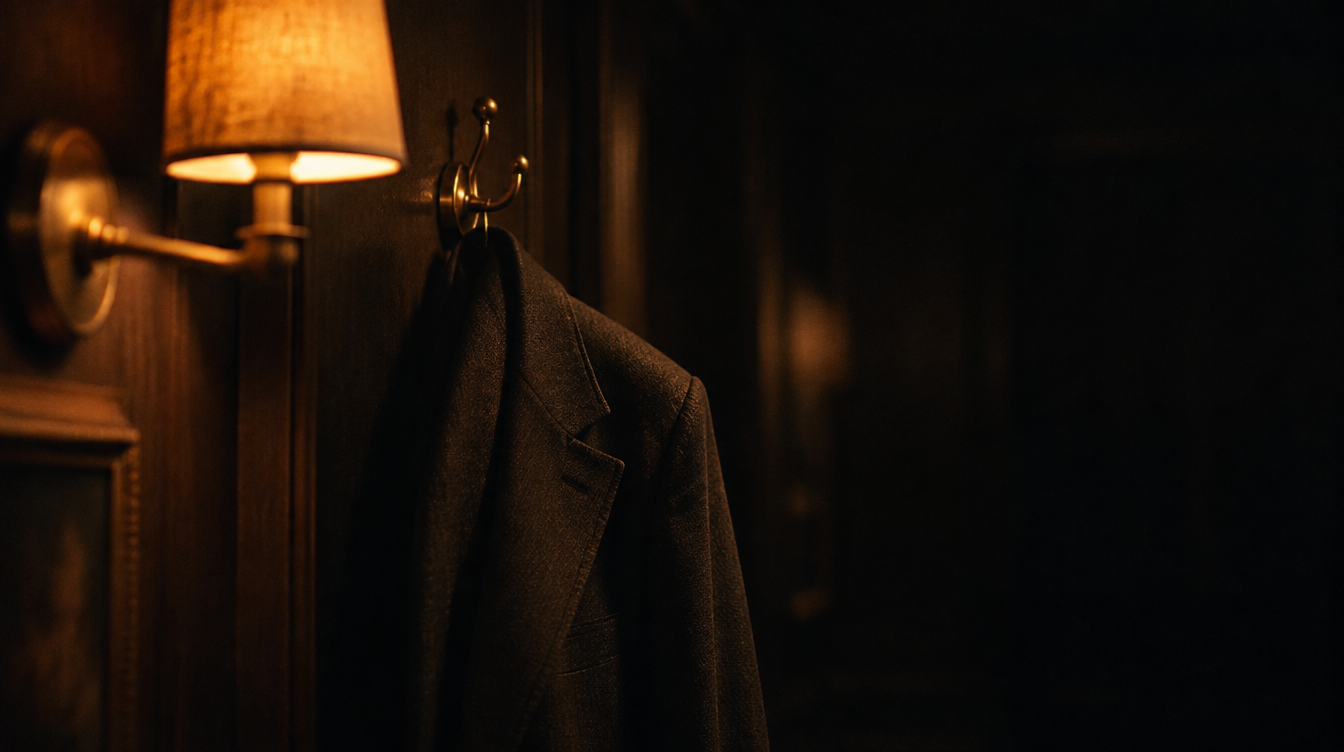
It's 9.04pm on a Friday at Ozone, 118 floors above Tsim Sha Tsui, and a man in board shorts is being told, politely, that he needs long trousers. He isn't underdressed by any normal measure — he's wearing a linen shirt, good sneakers, he's clearly not a problem. He's just three minutes late for a rule that changes at a fixed hour. At the world's highest bar, the dress code is printed, dated by the clock, and enforced without discretion. Two kilometres south, at the bar that was named the best in the world in 2025, there is no dress code at all. Hong Kong nightlife runs both extremes at once, and almost nobody explains the difference before you're standing at the door working it out in real time.
The world's best bar has no dress code, and that's the point
Bar Leone was named The World's Best Bar for 2025 at a ceremony held in Hong Kong itself, the first time a Hong Kong bar has topped the list. It runs no reservations, and its founder Lorenzo Antinori has built the place around what he calls cocktails for the people — a wood-panelled, memorabilia-covered room built to feel like a neighbourhood bar in Rome, not a members' room in Central. There's no stated dress code because gatekeeping isn't the model: the bar even publishes its own recipes online, free, for anyone to copy. You queue, you get a stool, nobody checks your shoes.
The best bar in the world runs on a line outside the door and a no-reservations policy, not a wardrobe check. The worst mistake you can make is assuming every room this good works the same way.
Hong Kong's serious cocktail bars — the ones with global rankings attached to their names — mostly work this way. Craft matters more than the collar. That's a real signal about the city's drinking culture right now: the seven Hong Kong bars that placed on Asia's 50 Best Bars 2026 list got there on drinks, not door policy. Treat an unpretentious room as a compliment to the city, not an invitation to turn up in flip-flops — comfort and looking like you tried are not the same thing, and door staff everywhere still read a room on sight even where nothing's written down.
Hotel rooftops write the rule down and enforce it by the clock
At the other end sits Ozone, the Ritz-Carlton's sky bar on the 118th floor of the ICC — genuinely the highest bar in the world, and one of the very few venues in the city that puts its dress code on its own website in full sentences. It recommends collared shirts, blouses, dresses, skirts, full-length trousers, and dress shoes or other smart footwear. Sandals and open-toed shoes are out. Men in sleeveless shirts are out. And the rule that trips people up: shorts are tolerated in the afternoon and stop being tolerated at 9pm, when full-length trousers become mandatory. It's the most literal example in the city of a broader rule: as the sun goes down over Victoria Harbour, the dress code tightens with it.
Most rooftops don't spell it out this precisely, but the pattern holds. Guides to the city's sky bars converge on the same phrase for the mid-tier of the format — smart casual with comfortable shoes — while flagging that a handful of upscale hotel rooms, among them the Ritz-Carlton and Felix at The Peninsula, expect something closer to formal, and reservations are worth making rather than assuming you'll walk in.
The members' clubs have the strictest and most literal rules in the city
If you want to see what a Hong Kong dress code looks like when someone has actually written down every edge case, read a members' club's rulebook. The Hong Kong Club's published policy bans flip-flops, work boots, hiking boots and rain boots outright, requires jackets in its formal rooms outside the May-to-September summer exemption, and treats denim as room-specific — blue denim banned in the Red Room and Jackson Room, non-blue denim tolerated elsewhere. The Hong Kong Jockey Club's members' policy is just as granular: closed-toe shoes required, flip-flops and plastic footwear named specifically as unacceptable, and athleisure confined to designated sports facilities only. The Foreign Correspondents' Club is more relaxed in its Main Bar but still rules out singlets and beach shoes anywhere on the premises.
None of this is nightlife, exactly — these are private clubs, not venues you can turn up to. But the vocabulary they use is the same vocabulary a good cocktail bar or a hotel restaurant will use if you ask their host what "smart casual" means tonight, so it's worth knowing what the words actually rule out: no flip-flops, no vests as outerwear, no visible gym kit, closed-toe shoes for men. That's the floor. Most rooms out for the evening set the bar somewhere above it, not below.
81% humidity is the real dress code, and it applies every night
The rule nobody prints on a door is the one that decides how a night actually goes: Hong Kong's mean relative humidity in August is 81%, at a mean temperature of 28.7°C, per the Observatory's 1991–2020 climatological normals. Layer that against the second half of the equation: shopping malls, hotel lobbies and half the bars in Central run air conditioning cold enough to need a jacket indoors five minutes after you were sweating on the pavement outside. That swing, not the door policy, is what actually ruins an outfit.
The practical answer is layering that survives both climates in the same hour — a jacket or light overshirt that comes off outdoors and goes back on indoors, breathable fabric underneath it, and shoes that don't turn into a liability the second the humidity hits them. Suede in August is optimism, not style.
Smart casual in Hong Kong has one meaning that holds across formats
Strip out the venue-specific edge cases and the phrase that gets used everywhere — smart casual — converges on the same short list across independent sources: a collared shirt or a proper top, tailored trousers or a dress, and closed-toe shoes. What it rules out, consistently: shorts, flip-flops, and anything that reads as athletic wear. That's not a Mandos house rule, it's what the city's own etiquette guides and club dress codes agree on when you line them up next to each other — the Ritz-Carlton's, the members' clubs', and the general guidance aimed at newcomers all land on the same handful of words.
For women, the range is wider and less policed — a dress, tailored trousers or a skirt reads as smart casual almost everywhere, and heels are a preference, not a requirement, at any venue named in this piece. For men, the collar is doing more work than any other single item in a wardrobe here: it's the fastest way to clear a door that a T-shirt, however good, cannot.
The door is reading confidence and timing, not a checklist
Most Hong Kong venues, including the well-known clubs, don't publish a dress code at all — no laminated card, no line on the website. That's not an oversight. Door staff at unlisted-policy venues are making a judgement call in real time, and the inputs are wider than an outfit: how the group presents together, whether the night is already busy, whether the person at the front looks like they know where they are. A clean, simple outfit executed with intent reads better than an expensive one worn carelessly, at every door in this city that doesn't have a rulebook.
The safest read for a first-time visitor: dress for the venue one tier above where you think you're going. A collared shirt and proper shoes get you past a door that would have hesitated over trainers and a T-shirt, and cost you nothing at the door that would have let either one through.
Sources
- Bar Leone named The World's Best Bar 2025
- Bar Leone atmosphere, no-reservations, current status and address
- Asia's 50 Best Bars 2026 — seven Hong Kong bars listed
- Ozone dress code, exact wording, current hours
- Hong Kong rooftop bar dress-code conventions, smart-casual phrasing
- The Hong Kong Club — published dress code and policies
- Hong Kong Jockey Club — members' dress code
- Foreign Correspondents' Club — dress code by room
- Hong Kong Observatory — August mean relative humidity and temperature, 1991–2020 normals
- General smart-casual/dress-code norms for Hong Kong visitors
- Upscale Hong Kong venue dress-code conventions
Frequently asked
- Do Hong Kong nightclubs actually enforce dress codes, or is it just talk?
- It varies by venue and isn't consistently published, which is itself the useful fact: most clubs make door decisions on the night rather than posting a written policy, while hotel bars like Ozone publish and enforce theirs in exact, timed language — full-length trousers required after 9pm, for example.
- What should men avoid wearing on a night out in Hong Kong?
- Across every published policy checked for this piece — from the Ritz-Carlton's Ozone to the Hong Kong Club to the Hong Kong Jockey Club — the consistent no-list for men is flip-flops or open-toed shoes, sleeveless shirts or singlets, and shorts after early evening. A collared shirt and closed-toe shoes clear almost every door in the city.
- Is Bar Leone, the World's Best Bar, hard to get into?
- It runs no reservations and there is no stated dress code — Lorenzo Antinori has built it deliberately as a no-gatekeeping neighbourhood bar. The trade-off is the queue: expect to wait for a stool rather than negotiate a door.
- How should I dress for Hong Kong's humidity without breaking a venue's dress code?
- August's mean relative humidity runs 81% at a mean 28.7°C (Hong Kong Observatory, 1991–2020 normals), and interiors are often heavily air-conditioned. Breathable fabric with a layer that goes on indoors and off outdoors solves the climate without compromising a collared-shirt-and-closed-shoes baseline.
- What does "smart casual" mean in Hong Kong specifically?
- Across the city's published guidance, it converges on the same short list: a collared shirt or equivalent top, tailored trousers or a dress, and closed-toe shoes — with shorts, flip-flops and athletic wear consistently excluded, even where a venue hasn't written its own policy down.