
Day Trips From Hong Kong: The Islands and the Green Side
The skyline is the postcard. The other Hong Kong is a 35-minute ferry ride away — stilt houses, a car-free hike between two fishing villages, a beach you reach by boat, and a pier bar to land back in before the night starts.
Fact-checked 10 October 2026
A woman guts a fish on a folding table outside her shopfront in Sok Kwu Wan, throws the offcuts to a cat that already knows the schedule, and doesn't look up as a tour group photographs the stilt houses across the bay. That's Lamma at lunchtime: unbothered by the ferry that just emptied onto its one paved path. Twenty minutes from Central by boat, Hong Kong stops being a skyline and starts being a coastline, and most visitors never go looking for it.
The ferry pier is the actual gateway to this city, not the airport
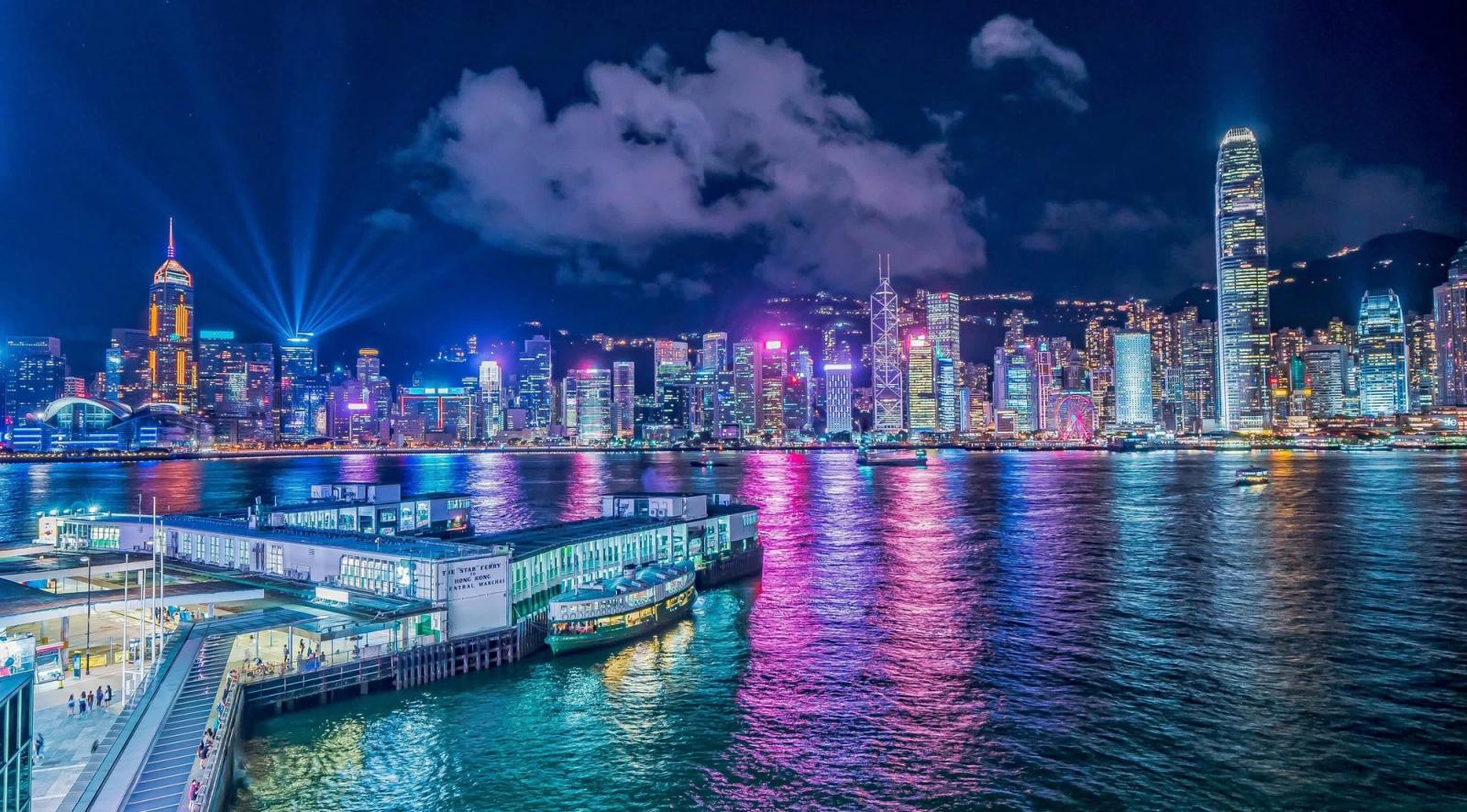
Central's Outlying Islands Ferry Piers sit in a row along the harbour, each numbered pier its own destination. Pier 4 runs to Lamma (Yung Shue Wan and Sok Kwu Wan), Pier 5 to Cheung Chau, and Pier 6 to Mui Wo and Peng Chau on Lantau. None of it needs a booking. You buy an Octopus-tapped ticket at the gate and get on the next boat, ordinary or fast. To Yung Shue Wan it's about 35 minutes on the ordinary ferry or 20 on the fast one (HK$24.90 adult weekday, HKKF, checked live Aug 2026); to Sok Kwu Wan, fast-ferry only, about 25 minutes. Cheung Chau runs 55–60 minutes ordinary or 35–40 fast, from HK$16.70 (Sun Ferry). Mui Wo runs 55 minutes ordinary or 40 fast, from HK$28.60 weekday (Sun Ferry, fares effective since August 2025). Peng Chau is 40–50 minutes, from HK$16.60 weekday, HK$23.90 Sundays and public holidays (HKKF). Worth knowing before you go: the government approved fare increases across the outlying-island network from 1 April 2026 — Cheung Chau rose 12.8%, while Mui Wo and Peng Chau single fares actually fell on weekdays even as their monthly and multi-trip passes rose roughly 8% (The HK Hub; Dim Sum Daily, both citing the Transport Department proposal). The figures above are the current live fares, not the pre-hike ones — check the operator's site the morning you travel, since these numbers move.
Sai Kung is the one place on this list you can't reach by ferry from Central — and the boats you take once you're there are the whole point.
Lamma trades a skyline view for a car-free coastal path
Lamma has no cars, which is the whole appeal stated plainly. The standard route is to land at Yung Shue Wan, walk the paved path that cuts across the island's waist to Sok Kwu Wan, and take the ferry back from there — a walk of roughly 5km that takes 1 to 1.5 hours at an easy grade, past Hung Shing Yeh Beach and a scatter of small shops and rest stops (fairyburger.com; mstravelsolo.com). Sok Kwu Wan itself is close to wall-to-wall seafood restaurants facing the water, the kind where the catch is still moving when you order it and staff will fire your table faster if you tell them which ferry you're catching. It's a half-day loop, easily done before lunch, which is why it works as the first stop on a longer day rather than the whole day itself.
Lantau's cable car climbs to the Buddha; the boat at Tai O goes looking for dolphins
Ngong Ping 360 is running normally as of this writing — no closures beyond a scheduled maintenance window earlier this year (2–21 June 2026), which has already passed (np360.com.hk). The 25-minute cable car ride up from Tung Chung to Ngong Ping Village currently costs HK$295 return for a standard cabin adult ticket, or HK$365 for the glass-floored Crystal Cabin, both up from HK$270 and HK$350 respectively since a price rise on 10 June 2025 (SCMP). At the top, the Tian Tan Buddha and Po Lin Monastery are the reason most people make the trip; the walk-in ticket is free, the cable car is the part you pay for. Go down to Tai O afterward rather than skipping it — it's the actual destination for anyone chasing the other Hong Kong. The fishing village's stilt houses still stand over tidal creeks, salted fish still dries on racks along the waterfront, and small motorised sampans run short loops out into the estuary where the Chinese white dolphin — locally the pink dolphin, for the colour the adults turn — is still occasionally sighted, though sightings have declined with vessel traffic and the operators themselves will tell you a trip isn't a guarantee (Cathay Pacific; Tripadvisor operator listings, checked 2026). Treat the boat as a look at the estuary, not a booked encounter.
Cheung Chau earns its bun-tower fame, but the rock is worth the walk any week of the year
If you're picturing the tower of buns scrambled by competitors at midnight, that's the Cheung Chau Bun Festival, and it already happened this year — the 2026 Piu Sik parade and bun-scrambling competition ran on 24–25 May (Time Out HK). Outside festival season, Cheung Chau is a smaller, quieter version of the same trade: a dumbbell-shaped island with a working fishing harbour on one side and a beach strip on the other, connected by a walkable town centre with no cars beyond a handful of licensed vehicles. Windsurfers train off Kwun Yam Wan Beach — this is where Hong Kong's only Olympic gold medallist, in the sport, learned the water — and the walk out to Cheung Po Tsai Cave on the island's southern headland takes you past a coastline that looks nothing like the one 45 minutes back across the harbour.
Sai Kung sells its beaches by the boat trip, not the bus stop
Sai Kung isn't reached from the Central piers at all — it's inland, a taxi ride of roughly 30–40 minutes from Central, or an MTR-plus-minibus combination via Hang Hau or Choi Hung stations that takes about the same door to door (hongkongliving.com). What you're going for is the waterfront promenade lined with kaido operators who run open motorboats out to the beaches and islands of the Hong Kong UNESCO Global Geopark on demand — no schedule, no booking, just haggle a fare and go. Sharp Island and Hap Mun Bay, both a short hop out, are the two most commonly named destinations, with a walkable sandbar connecting Sharp Island to its neighbouring islet at low tide (Hong Kong Living; Wikipedia). The seafood restaurants that line the same promenade are the other half of the reason people make the trip — pick your own catch from tanks, same as Sok Kwu Wan, different island. Hikers coming from the same direction often start MacLehose Trail Section 1, which runs 11.5km from Pak Tam Chung to Long Ke Beach, rated easy and taking around 4 hours (Wikipedia) — the gentlest possible introduction to a 100km trail that's the longest in Hong Kong.
Peng Chau is the island that stayed small on purpose
Peng Chau shares its ferry route with Mui Wo out of Pier 6 and is the smallest of the outlying islands most visitors reach in a day — under a kilometre across, with a single old-fashioned high street, a defunct match factory turned local landmark, and Finger Hill for a 30-minute climb to a 360-degree harbour view. It gets a fraction of Cheung Chau's or Lamma's footfall, which is precisely its appeal to anyone who's already done the bigger two.
The country parks cover 40% of the territory most visitors never enter
Hong Kong's country parks — the network the MacLehose and Dragon's Back trails sit inside — cover a large share of the territory's total land area, most of it visible from the Mid-Levels but almost none of it visited by anyone staying inside the tourist core. Dragon's Back, a ridgeline walk from Shek O to Big Wave Bay on Hong Kong Island's south side, is the shortest way to get a genuine country-park hike without leaving the island the skyline sits on — closer to town than any of the boats above, and the reason it's usually the first hike a visitor does before deciding whether to go further out.
The day closes back in the city, not on the island
Last ordinary ferries off the islands typically run through the early evening rather than late night, so the practical shape of the day is: out early, back by dinner, into town for whatever the night holds. That's not a compromise — it's the actual rhythm locals use these routes for, a slower half of the day banked before the faster half starts. Hong Kong's tourism numbers back up how much appetite there is for exactly this kind of range: visitor arrivals reached 26.71 million in the first half of 2026, up 13% year on year (Hong Kong Tourism Board via The Standard, 16 Jul 2026), and a city pulling in that many people at that growth rate is one where the skyline and the ferry pier both need to hold up to a closer look.
Sources
- HKKF, Central–Yung Shue Wan and Central–Sok Kwu Wan timetables and fares, checked live · 16 August 2026
- Sun Ferry, Central–Cheung Chau and Central–Mui Wo routes and fares, checked live · 16 August 2026
- Green Peng Chau, Central–Peng Chau ferry fares, checked live · 16 August 2026
- Hong Kong Free Press / The HK Hub / Dim Sum Daily, six outlying-island ferry fare changes effective 1 April 2026 · 12 March 2026
- np360.com.hk, Ngong Ping cable car maintenance notice (2–21 June 2026), checked live for current status · 16 August 2026
- South China Morning Post, Ngong Ping 360 ticket price rise effective 10 June 2025 · 10 June 2025
- Time Out Hong Kong, 2026 Cheung Chau Bun Festival dates (24–25 May 2026) · 8 May 2026
- fairyburger.com and mstravelsolo.com, Lamma Island Yung Shue Wan–Sok Kwu Wan hike distance and duration · 16 August 2026
- Wikipedia, MacLehose Trail Section 1 distance, grade and duration · 16 August 2026
- hongkongliving.com, transport routes and journey times to Sai Kung town · 16 August 2026
- The Standard via Hong Kong Tourism Board, H1 2026 visitor arrivals of 26.71 million, up 13% year on year · 16 July 2026
Frequently asked
- Do I need to book Hong Kong's outlying island ferries in advance?
- No. Ordinary and fast ferries from Central Piers 4, 5 and 6 run on a fixed timetable throughout the day; you buy a ticket at the pier (Octopus accepted) and board the next departure. No reservation system exists for the standard routes.
- Is the Ngong Ping 360 cable car running in 2026?
- Yes, as of this writing. It underwent scheduled maintenance from 2 to 21 June 2026, and no further closures were announced beyond that window at the time of checking. Confirm on np360.com.hk the morning you go, since maintenance windows are announced with only weeks of notice.
- Can you combine two islands, or an island and a hike, in one day?
- Lamma's Yung Shue Wan–Sok Kwu Wan walk takes 1 to 1.5 hours and both piers have frequent return services, which makes it the easiest to pair with a second stop. Lantau's cable car plus Tai O is a full half-day on its own given the ride, the village and the boat. Treat one island or one hike as a comfortable day; two is possible only if the first is Lamma.
- Are the pink dolphins near Tai O guaranteed on a boat trip?
- No. Chinese white dolphin sightings near Lantau have declined with vessel traffic in the surrounding waters, and operators themselves don't promise a sighting. Book the trip for the estuary, the stilt houses and the ride — a dolphin is a bonus, not a given.
- How do I get to Sai Kung if it's not on the Central ferry piers?
- Sai Kung town is inland in the New Territories, not an island. A taxi from Central takes roughly 30–40 minutes; MTR to Hang Hau or Choi Hung station followed by a minibus takes about the same door to door. Once there, boats to the beaches and Geopark islands leave from the town's own waterfront promenade.