
Where Hong Kong's After-Work Crowd Actually Drinks, Six to Eight
We run rooms in this city for a living. Here's how the finance crowd actually decides where six o'clock happens, what the happy hour clock is really pricing, and why the one drink was never going to stay one.
Fact-checked 10 October 2026
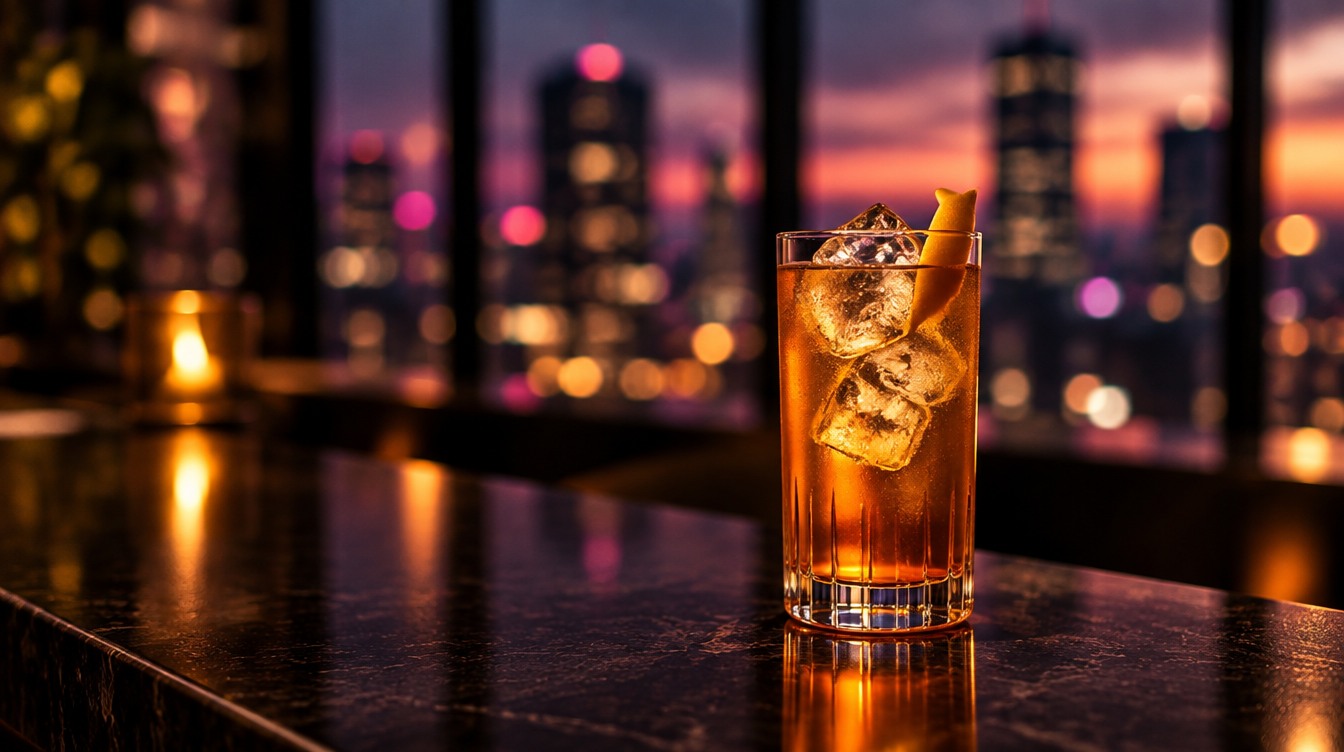
Six-oh-four on a Friday and someone in the group chat has already typed drink? — no destination, no time, just the word doing all the work it needs to do. By the time I'm walking down from the office it's turned into eleven replies, two changes of venue and one person already standing outside with a Peroni insisting nobody needs to book anything. I've run rooms in this city long enough to know exactly how the next two hours go: the six o'clock quick one turns into four rounds, the group that swore it was "just popping by" orders food at nine, and nobody who left their desk at 6pm meant for any of it to happen. That's not a failure of willpower. That's the after-work window doing precisely what six-to-eight was built to do.
The first round gets decided before anyone leaves their desk
Nobody actually chooses where the after-work drink happens. Somebody leaves the building five minutes early, gets to the nearest open door, and by the time the rest of the desk has wrapped up, the venue has already been decided for them by geography and momentum, not preference. That's why Central skews toward whatever's closest to the tower, and Lan Kwai Fong and SoHo skew toward whoever already has a table. The 6pm crowd isn't choosing a bar. It's joining one that someone else already picked by walking into it first.
A quick one in Central ends at the register; a settle-in in SoHo doesn't
There's a real difference between the two, and it isn't distance — Central and SoHo or Lan Kwai Fong sit five minutes apart on foot. It's what the room assumes about you. A bar built into the basement of an office tower is built for one drink and an exit: order at the counter, stand near the door, watch the clock without looking like you're watching it. A bar three streets up the hill is built assuming you're staying, which is a completely different piece of furniture, staff ratio and menu. Confusing the two is how a "quick one" turns into missing dinner.
Standing on Wyndham Street is the plan, not the fallback
Every visitor asks the same question about Lan Kwai Fong and Wyndham Street on a weekday evening: why is everyone standing outside with a drink instead of sitting down. The honest answer is that the street is the room. Bars here are built vertically and narrow — climb three floors for a table and you've left your desk-mates a floor behind — so the crowd solves it by drinking on the pavement instead, and the venues plan for exactly that: the counter by the door does more business between six and eight than most of the seating upstairs does all night.
Nobody at Wyndham Street failed to find a table. They found a better one — theirs is the whole street.
Happy hour pricing is built to move you through, not keep you
The economics of the window explain more about how the night actually goes than any "one drink" promise does. Some Central rooms discount in a straight line: GOGYO, tucked into the basement of Landmark Alexandra directly under the bank towers on Chater Road, runs buy-one-get-one on Suntory draught, prosecco, sake and wine, Monday to Friday, 5 to 7:30pm — a deal built entirely for two colleagues splitting a round on the way to the MTR. Others price by the clock instead of by the pour: at Sam Fancy, three floors up on D'Aguilar Street in the thick of Lan Kwai Fong, the same drink runs from HK$30 at 5pm to HK$60 by 9pm, so the discount itself is quietly telling you when to leave. Neither mechanic is designed to keep a table full past eight. Both are designed to turn a desk over into a drink, and the drink back over into a decision — stay at full price, or go home.
The rooms pouring these drinks are thinner than they look from a barstool
None of this happens against a flat backdrop. Hong Kong's bar sector took in 4.0% less by value and 3.9% less by volume in the first quarter of 2026 than the same quarter a year earlier — a narrower slice inside a restaurant sector whose total receipts actually rose 1.1% in value, driven mostly by non-Chinese restaurants, up 2.8% (Census and Statistics Department, 6 May 2026). The Hong Kong Bar and Club Association put a sharper number on the churn behind it: roughly 120 bars, close to a tenth of the city's estimated 1,200, shut in the first half of 2025 alone, even after nearly 80% of operators had already negotiated rent cuts of 20 to 30% (chairman Chin Chun-wing, via The Standard, 4 February 2026). Against that, the same association reckons 70 to 80 new bars open most years — roughly what's needed to hold the total steady. None of it has made the pour cheaper at the cost of quality: the October 2024 cut to spirits duty pushed liquor trading volume up 60% in the following quarter (Secretary for Commerce and Economic Development, via SCMP, 4 March 2025), so the rooms that survived are stocking better bottles at a lower cost and fighting harder for the one crowd of the week they can actually count on — the six-to-eight desk exodus.
Where the after-work crowd actually goes
For the quick one: Murray Lane, the ground-floor bar at The Murray hotel on Cotton Tree Drive, runs "Murray Hour" Monday to Friday, 5 to 8:30pm, with buy-one-get-one on champagne, wine and spirits and snacks thrown in — the version of a discount built to look like you didn't need one. Stormies moved out of its old corner spot on D'Aguilar Street into Central Market in 2023, kept the same team and the same loud, big-format energy, and proved the old Lan Kwai Fong crowd doesn't disappear when a lease ends, it just relocates three hundred metres. For the settle-in: The Dispensary, inside Tai Kwun's old police headquarters block on Hollywood Road, runs buy-one-get-one across beer, wine and cocktails most of the week and gives the SoHo crowd somewhere to sit that isn't a curb. Honky Tonks Tavern, further along Hollywood Road, runs its "Honky Hour" into the evening most nights of the week — a dive built for the drink that was never going to be just one.
The four was always the plan, even when the one was the promise
By the time the happy hour clock runs out — most of these windows close somewhere between 7:30 and 8:30pm — the group that arrived for one drink is usually still there, now paying full price without having noticed the shift, because leaving at that exact moment means being the one who ends the night. That's not the discount failing. That's the discount having done its only job: getting everyone in the door before anyone had actually decided to stay this long.
Sources
- Census and Statistics Department, Provisional statistics of restaurant receipts and purchases for first quarter of 2026 · 6 May 2026
- Secretary for Commerce and Economic Development Algernon Yau, via SCMP, "60% increase in liquor trading volume after Hong Kong tax cut: commerce chief" · 4 March 2025
- Hong Kong Bar and Club Association chairman Chin Chun-wing, via The Standard, "HK saw 120 bar closures in first half of 2025" · 4 February 2026
- afoodieworld, "The 22 best happy hours in Hong Kong to try this summer 2026" (venue addresses, hours, prices for Murray Lane, Sam Fancy, GOGYO, The Dispensary) · 2 July 2026
- thebeat.asia, "Legendary Lan Kwai Fong bar Stormies reopens in Central Market" · 21 July 2023
Frequently asked
- What time do Hong Kong's after-work happy hour deals usually end?
- Most weekday windows in Central, SoHo and Lan Kwai Fong run somewhere between 5pm and 8:30pm. Murray Lane's runs to 8:30pm, GOGYO's ends at 7:30pm, and Sam Fancy's discount shrinks on a clock rather than switching off outright — climbing from HK$30 at 5pm to HK$60 by 9pm.
- Is Central or Lan Kwai Fong cheaper for after-work drinks?
- It depends on the deal type, not the district. Buy-one-get-one offers, like GOGYO's or The Dispensary's, only save money when two drinks go on the table; a straight discount like Sam Fancy's early pricing pays out even for one person drinking alone.
- Why does everyone stand outside on Wyndham Street and in Lan Kwai Fong instead of sitting down?
- Because the bars there are built narrow and vertical, with limited seating upstairs, so the pavement functions as the room. Venues plan their bar-by-the-door business around exactly that crowd, not despite it.
- Has the number of bars in Hong Kong actually gone down?
- Yes, in the short term. Roughly 120 bars, close to a tenth of the city's estimated 1,200, closed in the first half of 2025, per the Hong Kong Bar and Club Association — though the association also puts typical annual openings at 70 to 80, which is close to what's needed to hold the total steady.
- Do these happy hour deals apply on Fridays?
- Not uniformly — check before you go. Murray Lane and GOGYO both run Monday to Friday; The Dispensary's standard window runs Saturday to Thursday, with a separate, shorter Friday slot from 5 to 7pm.